
Profiles Fitted to the Room, Not Forced Into It
Custom Trimwork in Waco for homes where new molding must match existing proportions or complete a custom interior from the ground up
Trim that does not match the existing proportions of a room is immediately visible—a baseboard that is too shallow for an eight-foot ceiling looks like it belongs in a different house, and a crown molding profile that does not relate to the door casing scale below it reads as a collection of unrelated parts rather than a designed interior. Cornerstone Design Co. installs custom trimwork in Waco and surrounding Central Texas communities, including baseboard, door and window casings, and crown molding, with profiles selected to suit what the room already contains. Their in-house crew fits each profile to the actual room dimensions so corners, joints, and transitions line up cleanly rather than being adjusted in the field to compensate for planning done off a floor plan.
The process starts with profile selection based on the room's ceiling height, door and window scale, and whether the trim is replacing existing work or starting from bare drywall. Pieces are cut and fitted in house, then installed after walls are prepared, with joints and reveals checked as the work progresses rather than at the end when corrections require removal. That ongoing verification keeps the work consistent across a full room rather than producing a result where the first wall looks tighter than the last. Cornerstone's two-year labor warranty on materials they supply, stacked on top of the manufacturer's warranty, applies to the completed trimwork as installed.
Schedule a room walkthrough with Cornerstone Design Co. to review existing trim profiles and identify which new work can be matched, blended, or intentionally differentiated to suit the design direction.
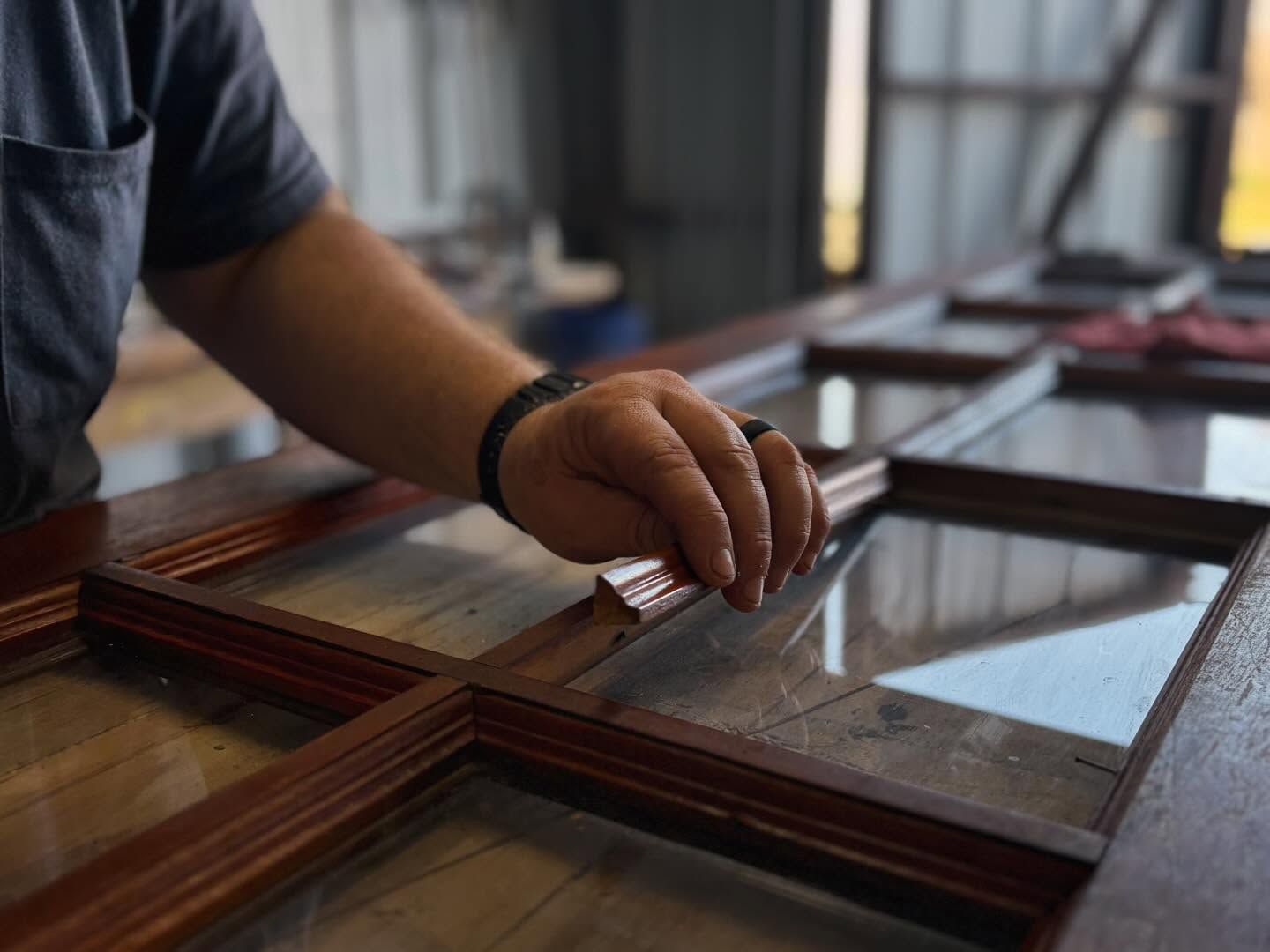
The Difference Between Matched Trim and Mismatched Upgrades
In both newer custom homes and older Waco-area houses being updated, the central trim challenge is usually matching: new baseboard that reads the same as original work in adjoining rooms, or a crown molding profile that relates to the door casings already installed. When trim is sourced from a stock profile catalog without reference to what is already in the house, the result is a room where the update draws attention to itself rather than completing the interior. Cornerstone selects profiles with the surrounding room in mind—not only height and width, but the ratio between the flat field of a casing and its edge detail, which is how different profiles in a room either relate or conflict.
After trimwork is installed and painted, the room reads as complete rather than in progress. Doors look framed rather than set into a drywall opening, ceiling lines have defined edges, and the transition from wall to floor is clean rather than an unresolved joint. Those are functional visual outcomes, not stylistic preferences—they are how trim work is supposed to look when it is built and fitted correctly, and they are visible in every room the crew completes.
Trim that is finish-ready for paint when the crew leaves means reveals are set, joints are tight, nail holes are filled, and caulk lines are dressed before they hand off to the painter. Leaving that prep work to the painting contractor is common on production builds and remodels where trim is subcontracted, and it is one of the most consistent ways that trim work ends up looking adequate rather than clean.
Common Questions About How Trim Is Selected and Installed
Fully insured—verifiable coverage for kitchen remodeling, bathroom renovation, and carpentry work in TX
The following questions address the decisions involved in custom trimwork—how profiles are chosen, how installation is sequenced, and what a properly fitted room looks like when the work is complete.
How is a trim profile selected to suit a specific room?
Ceiling height is the primary driver: rooms with ceilings at eight feet read best with baseboard heights between three and a half and four and a half inches, while taller ceilings support deeper profiles without looking heavy. The door casing scale and whether the room has crown molding also affect which baseboard profile reads as proportionally correct.
What does it mean for trim to be fitted rather than forced?
Fitting trim means taking actual measurements from the installed wall surface—not from a plan—and cutting pieces so they land square at corners and tight at joints without relying on caulk to fill gaps. Forced trim is cut to nominal dimensions and caulked heavily at joints to hide the difference, which shows in the finished room as shadow lines and soft edges where the caulk has dried.
Why does trim installation happen after walls are painted rather than before?
Installing trim before paint means the painter's tape and cut line land on the trim surface, and brush loading at the edge often produces a thick paint edge that raises the caulk line. Trim installed after final wall paint allows the painter to cut directly to a sharp trim edge, which produces a cleaner result with fewer coats needed at the transition.
How does existing trim in a home affect what new profiles can be used?
In homes in Hewitt and similar Waco-area communities where rooms connect through open doorways, mismatched baseboard profiles between rooms are visible from multiple angles. The new profile either needs to match the existing one closely enough to read as continuous or differ clearly enough to read as a deliberate design change—anything in between reads as an error.
What should joints at outside corners look like in finished trimwork?
Mitered outside corners on baseboard and casing should close tight without a gap at the tip of the miter and without a raised edge where one piece sits above the other. A properly fitted outside corner does not require caulk to fill the joint—caulk at an outside corner is a sign the pieces were not cut to the room's actual angle, which is rarely a perfect 90 degrees.
To review the trim scope for your project and discuss which profiles suit the rooms involved, call Cornerstone Design Co. at (254) 512-9176. Cornerstone Design Co. also installs custom trimwork in Waco, Hewitt, Killeen, Temple, and Belton.